
I Know Kung Fu and AI
AI's biggest success is the coldest thing it does. What people actually want from it is the warmest. The gap between those two is the most important business problem nobody has named — and the only skill that closes it is knowing which program you need.
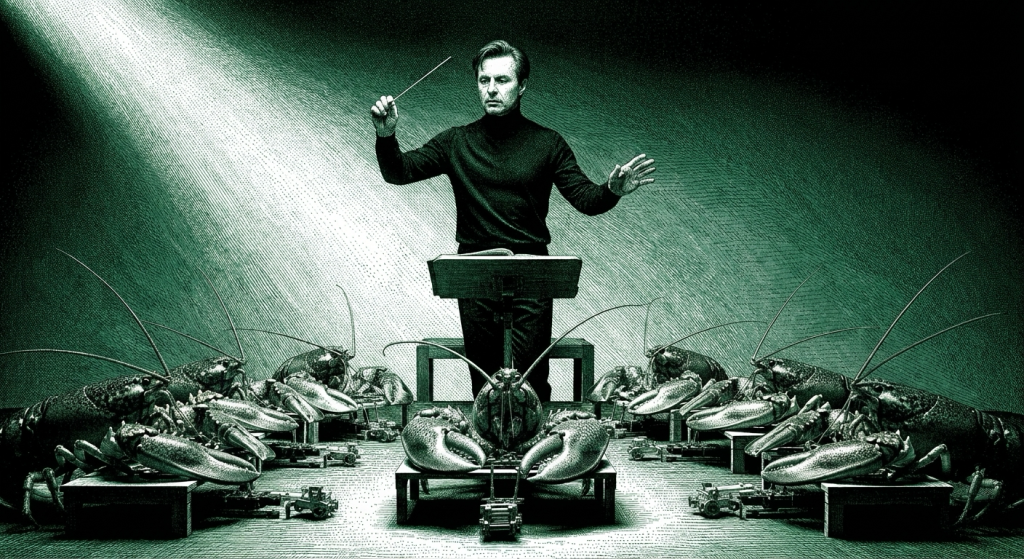
THE NUMBER: 11 — the seconds your doctor listens before interrupting you, on average. In 1984 the number was eighteen, so we’ve spent forty years getting worse at the one thing we keep insisting machines can’t do. The thing American medicine ran out of is the thing the machine has in unlimited supply. The catch is that it only hands it over if you know to ask.
Tank jacks the disk in. Trinity has to fly a military helicopter she has never touched. “Can you fly that thing?” “Not yet.” A phone call, a few seconds of upload, and she lifts a B-212 off a rooftop. Neo wakes from a different download and says the three words that became the whole fantasy of the franchise: I know kung fu. The genius of that scene is what it leaves out. Nobody studies. Nobody practices. The entire hard part is knowing which program you need before you ask for it. That used to be science fiction. There are now something like a billion and a half people standing in that exact dojo every week — and almost none of them make the request.
I had two long conversations with an AI this week, and they had nothing in common except the window I typed them into.
The first was a medical decision. I needed to frame a specific question, lay out the full context, weigh it cold, and come to an answer. Pure intelligence. The thing carried out orders like a sharp resident who’d read every chart — no warmth required, none wanted. The second was the opposite. I needed a mirror. Hours of pouring out a tangle of thoughts and getting real pushback, real framing, someone who’d listen without flinching and tell me where I was kidding myself. Same product. Same login. I turned one dial toward the problem and the other toward me, and it met me at both ends.
That’s the whole story of AI right now, and almost nobody is telling it straight. The machine doesn’t really sell intelligence. It sells range — the ability to be a calculator or a confessor depending on what you walk in needing. The model that does this is becoming a commodity, the same dojo for everyone. What it can’t supply is the part Trinity made look easy: knowing it’s the helicopter you need, right now, before you pick up the phone. Most people stand in front of the helicopter waiting for it to fly itself. To borrow from a small green authority on the subject — that is why they fail.
This issue is about that gap, why the most valuable AI skill left is choosing the program, and why the job that’s actually left for you is putting the humanity back into the cold machine that does everything else for free.
🩺 The doctor who reached past the smart tool — and found her bedside manner in a chatbot
Helen Ouyang is an emergency physician and a professor at Columbia. A few months ago her routine bloodwork came back a little high, her doctor signed off with the usual advice to keep dieting and exercising, and when she asked for a phone call she got told to book another appointment. So she did what everyone does now. She typed her labs into ChatGPT with low expectations. She wrote it up for the New York Times last week, and the part that should stop every operator cold isn’t that the bot was smart. It’s which tool she trusted.
She’d assumed the human side of medicine was the part AI couldn’t touch. The opposite happened. OpenEvidence — the AI built for doctors, the one optimized for clinical rigor — felt cold and sterile, treated her like a case report. The general-purpose chatbot is the one that asked about her actual life, tailored what she could realistically change, never got annoyed when she asked the same dumb question twice, and kept cheering her on. Her numbers improved, and she says it was because of the sustained back-and-forth she’d never gotten from a person. She mentions a patient with a highly curable cancer who asks a chatbot every single week whether he’ll be cured. He already knows the answer. He just wants to hear it again from something that always has time.
Here’s the line that matters most, and it’s hers: she knows when to question the chatbot and when to ignore it. Most patients don’t.
Why this matters: the purpose-built intelligence tool lost to the generalist because the doctor didn’t need more intelligence — she needed presence, and she was literate enough to go get it. Choosing the right program sometimes means refusing the obvious one. Your team has an OpenEvidence problem brewing in every department that bought the specialized, “serious” AI and wonders why nobody uses it. The tool that wins is the one that reads the room. The skill that wins is knowing which room you’re in.
💲 Coding wins the market. Presence wins the people. Those are not the same end of the wire.
By cold dollars, AI’s killer app is autocomplete for engineers. Coding is the cleanest success the technology has had, and the reason is exactly the reason it leaves you a little cold: code doesn’t need to be understood, only executed. Pure logic, explicit instructions, no human on the other end to soothe. That’s why it worked first, why it works best, and why the money keeps flooding the agent economy — Cognition raised at a $26 billion valuation this month, and the API revenue underneath all of it is coding, coding, coding.
Now look at what actual humans do with the thing when nobody’s billing them by the seat. The most recent self-reported ranking, Marc Zao-Sanders’ Top-100 study in HBR, puts therapy and companionship at number one. Personal and emotional support as a category nearly doubled in a year, from 17% to 31%. Generating code sits at number five; improving code, number eight. The big behavioral study, the OpenAI usage paper, tells a slightly different story, and the difference is the whole point. By raw message volume the everyday stuff dominates — practical guidance, looking things up, writing — and pure companionship is a small slice. But non-work messages climbed to 73%, up from barely half a year earlier.
Read those two studies next to each other and you get the real shape of it. The volume is practical. The meaning is relational. And the relational share is the fastest-moving thing in the data. People reach for AI most often to get a task done and value it most when it sits with them.
Sam Altman has basically admitted the company flying this plane has no instruments for the important part. In a recent interview he called setting ChatGPT’s personality the most impactful thing OpenAI does, then said the quiet part: there’s no scientific framework behind it. None. Bioweapons get rigorous red-teaming; the personality nine hundred million people confide in every week gets vibes. His fix is to call up monks and clinical psychologists to write instruction manuals nobody has ever written. The people he’s phoning aren’t AI researchers. They’re people who understand humans. That tells you exactly where he thinks the unsolved problem lives.
The signal: the market built its triumph at the cold end of the wire while human demand climbed toward the warm one, and the warm end is being designed by accident. The doctor and her cancer patient aren’t anecdotes. They’re the leading edge of a migration the usage data already shows, running straight at a product nobody has engineered on purpose.
🦞 The most valuable hire isn’t the 100X engineer. It’s the operator who knows what to ask for.
Yesterday we said AI 10X’s everyone and 100X’s your best people, and that the old Combine can’t even find them. Both true. But we’ve been mis-scouting the position. The 100X engineer is the kung fu program: raw, uploadable capability, and yes, you want it on the roster. The person who knows it’s kung fu you need this morning and a helicopter pilot by afternoon is rarer, and worth more. Trinity couldn’t fly the thing herself. Her whole value was the request. That’s the operator, and the leverage is second-order: they don’t multiply the work, they multiply the people who do. Ten 100X engineers with no operator ship ten brilliant things nobody asked for.
This is why the early stories about AI rearranging the org chart keep landing on product managers instead of engineers. The PM was always sitting on the most context: the customer, the business, the roadmap, the gap between what’s possible and what’s worth building. What they lacked was a way to test an idea without filing a ticket and waiting two sprints. AI took that tax to zero. Now the person with the most context can prototype the idea the same afternoon they have it, and the context finally compounds. But watch what that does to the PM who only ran the standups. When everyone can prototype, the process-runner has nothing left to sell, and the only thing separating a real operator from a coordinator with a title is the quality of the request. AI is the great equalizer of execution, which makes it the great exposer of judgment.
That judgment is the harness. In the dojo the upload is free and permanent; in the real world you build the thing and maintain it: the context you feed it, the memory, where it plugs into the work, the posture of knowing what you’re there for. Altman wants to sell you a personal AGI that handles all of it. Fine. But the part that compounds is the part you architect yourself, including how much humanity the system carries: when your agent should answer like a sharp resident, and when it should answer like someone who has time. The cold execution is racing to zero. The program will not add the judgment for you. That is the operator’s entire job.
The action item: quit scouting only for the 100X engineer. They’re at least legible; you can sort of measure output. The operator shows up on no instrument you own, which is exactly why they’re underpriced. Hand your highest-context people a pile of agents and a vague, important problem, and watch what they ask for. The ones who know what to load are worth more than the ones who can build — and most of them are already on your payroll, sitting in the product org, finally unblocked.
What This Means For You
The intelligence got cheap. What stayed expensive is knowing what you actually need from it, and wiring that need into something that lasts. The whole continuum — sharp resident to patient listener — is available in the same window, and the difference between the people who get the right answer and the people who get the default is not the model. It’s the operator.
Stop scouting only for horsepower. Hire the operator. Your edge isn’t access to AI; a billion and a half people have that. It’s knowing which program the situation demands — and the operator who knows is rarer, and worth more, than the 100X engineer who can build. They’re already on your team. You’ve just been measuring the wrong thing.
Stop buying intelligence. Start engineering presence. The cold execution is commoditizing to zero. The premium is on the warmth, the judgment, the read-the-room — the parts you have to deliberately design into your harnesses, because the factory default won’t.
Treat the personality layer like it’s load-bearing, because it is. If the most-used AI on earth ships its most impactful feature with no framework, that’s not a risk to wait out. It’s an opening for anyone willing to do the work the labs are outsourcing to monks.
The companies that win this next stretch won’t be the ones that cut nine people because one agent can do the work. They’ll be the ones that hire five people who each know exactly which program to load — and build agents that carry a little of their judgment with them.
Three Questions We Think You Should Be Asking Yourself
Do you actually know what you need from AI before you open the window — or are you taking the default? The default personality is what nine hundred million people get because they never specify anything else. If you can’t name whether you need the resident or the confessor for a given task, you’re getting whatever the factory set, and you’re calling it the model’s limitation when it’s yours.
Which of your systems were built to execute, and which were built to carry judgment? Most teams have wired AI for throughput and never once asked where the humanity belongs. The cold parts are easy and everyone has them. The question is whether you’ve designed anywhere for the warm ones, or whether you’re shipping case-report energy to customers who wanted a person.
If presence is the fastest-growing thing people want from machines, what does that say about what they’ve stopped getting from each other? The doctor’s cancer patient is asking a bot for reassurance he can’t get in eleven seconds of appointment time. That’s a market signal and an indictment in the same breath. Decide which one you’re going to build for.
“It behaved the way I wish modern medicine, and its practitioners, still would.”
— Dr. Helen Ouyang, emergency physician, on why she kept using a chatbot
— Harry and Anthony
Sources
- Doctors, This Is Why Our Patients Are Using ChatGPT — Helen Ouyang, The New York Times (May 24, 2026)
- Sam Altman’s Vision For the Future — “The Next Big Thing” w/ NothingButTech (interview aired May 1, 2026)
- The 2025 Top-100 Gen AI Use Case Report — Marc Zao-Sanders (HBR / Filtered)
- How People Use ChatGPT — OpenAI / NBER working paper (Sept 2025)
- Physicians Interrupting Patients — Singh Ospina et al., NIH/PMC (11-second finding; 1984 = 18 seconds)
Past Briefings
Magnifica Humanitas
One hundred and thirty-five years ago this month, an Italian pope signed a letter about the Industrial Revolution that reshaped a century of labor doctrine. Eleven days ago — the same day on the calendar — an American pope signed its sequel about the AI revolution. Yesterday at the Vatican, he released it to the world with the co-founder of Anthropic standing next to him at the lectern. THE NUMBER: 135 — the years between May 15, 1891, when Pope Leo XIII signed Rerum Novarum — Latin for of new things — and reshaped a century of Catholic teaching on...
May 27, 2026Mr. Irrelevant
By Christmas of his rookie year he was leading the San Francisco 49ers to the NFC Championship game. By 2024 he was a Pro Bowler. The scouting model had missed him by 261 picks. Corporate America is running the same scouting model on its own employees this week — same drills, same stopwatch, same broken Wunderlic — and cutting its Brock Purdys for being too productive. The Pope opened his encyclical with a warning about vigilance two days ago. Anthropic shipped the toolkit for it yesterday. The other two layers of the AI-forward operating system are still in your building,...
May 22, 2026Emmet’s Roof
THE NUMBER: 222 — the years between the morning of July 11, 1804, when Aaron Burr shot Alexander Hamilton on the dueling grounds at Weehawken, and the May afternoon I sat in a stripped conference room on the 32nd floor of 120 Broadway signing a loan refinancing with a wet pen, a marble bust watching me from a shelf in the corner. Hamilton's chair — most influential lawyer in New York, founder of The Bank of New York, architect of the United States financial system — stayed empty for five months after the duel. In November 1804 an exiled Irish...