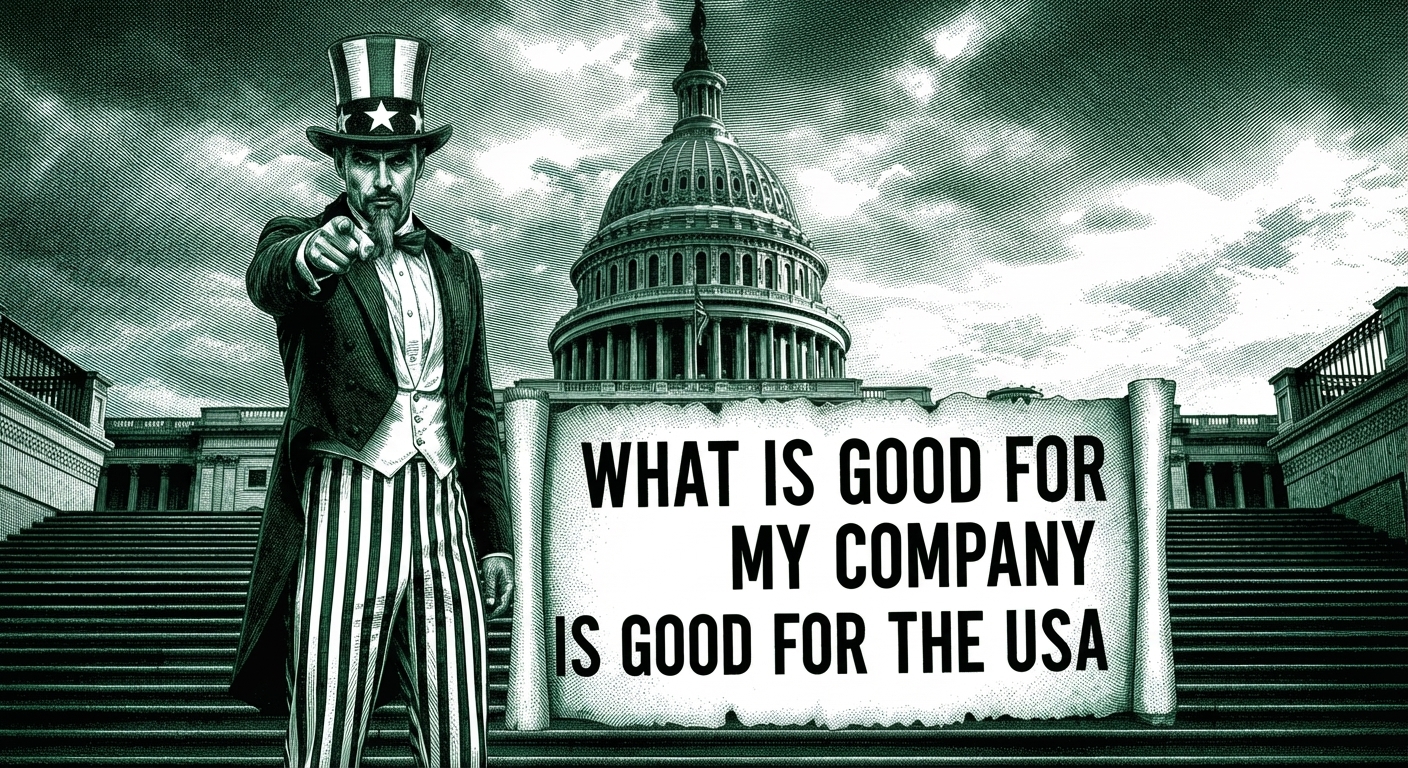
Sam Altman Just Pitched the U.S. Taxpayer as OpenAI’s Next Investor. Nobody Noticed.
When you owe $600 billion and private money gets nervous, you don't pitch VCs. You pitch the entity that prints the money.

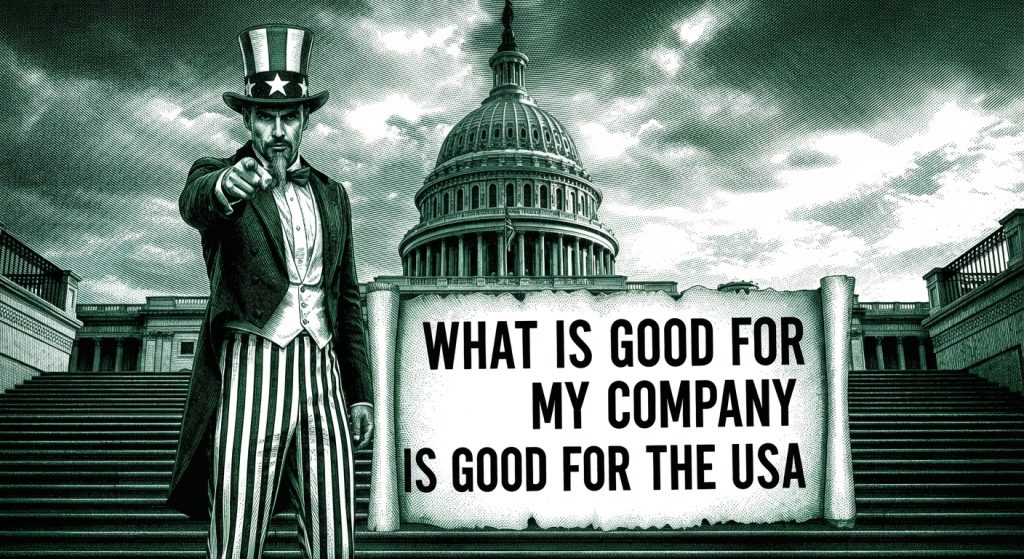
THE NUMBER: $600 billion — OpenAI’s spending commitments against $14 billion in projected 2026 losses and an IPO its own CFO says isn’t ready. When you owe the bank $300,000, you have a problem. When you owe the bank $600 billion, the bank has a problem. Sam Altman just published a 13-page policy paper proposing the U.S. taxpayer become that bank.
Sam Altman published a 13-page blueprint today proposing robot taxes, a public wealth fund, and four-day workweeks. Axios called it “Sam’s Superintelligence New Deal.” Bloomberg, TechCrunch, and Gizmodo all ran it within hours. That’s not organic coverage. That’s a press operation. And the audience isn’t Silicon Valley. It’s Congress. When you owe $600 billion and neither the private nor the public market will bail you out, you pitch the entity with the unlimited balance sheet: the U.S. taxpayer.
The timing isn’t subtle. On Friday, Anthropic took OpenClaw behind a paywall, a product OpenAI now owns. OpenAI’s CFO admitted the IPO isn’t ready, projecting $14 billion in 2026 losses against $600 billion in commitments. Claude is eating the coding market. The secondary markets are repricing the race in Anthropic’s favor. So what does the showman do? He doesn’t play defense. He pitches the New Deal. Robot taxes that make displacement politically safe. A wealth fund that gives voters a stake. Data centers in swing states. A Pentagon contract that Anthropic refused to sign. Product leaks, media acquisitions, and a coalition with xAI, Palantir, and Anduril that positions OpenAI as the patriotic AI company America can’t afford to let fail.
Meanwhile, Microsoft quietly shipped three foundation models that beat OpenAI’s own tools at transcription and image generation. And a two-person healthcare company called DeepCura is proving that the real AI revolution isn’t happening in policy papers or press cycles. It’s happening in production, with agents that actually work.
The pattern this week isn’t about technology. It’s about who controls the narrative. And whether you can still tell the story from the product.
The Showman’s New Deal
💲 We’ve depicted Sam Altman as PT Barnum before in these pages. He’s back, and this time he’s pitching the New Deal. Except this time, the audience isn’t Sand Hill Road. It’s Capitol Hill.
OpenAI’s “Industrial Policy for the Intelligence Age” landed today with the choreography of a product launch. A 13-page document proposing a public wealth fund seeded by AI companies, robot taxes to shift the burden from payroll to capital gains, auto-triggering safety nets tied to economic displacement data, and incentives for 32-hour workweeks at full pay. Sam reposted a team member calling it “policy ideas for the transition to superintelligence.” Bloomberg ran it as electric grid spending. TechCrunch ran it as robot taxes and four-day weeks. The press wrote the headlines Sam wanted them to write.
Thirty newsletters will cover this as a policy story. It isn’t. It’s a funding strategy.
Here’s the math. OpenAI projects $14 billion in losses for 2026. $600 billion in spending commitments sit on the books. The CFO told the board the IPO isn’t ready. The secondary markets tell the rest: $2 billion in capital is chasing Anthropic shares with sellers impossible to find, while $600 million in OpenAI paper sits unsold. Private money is getting nervous. Public markets won’t have you. Where do you go when you owe $600 billion and neither the private nor the public market will bail you out?
You go to the entity with the unlimited balance sheet. You go to the taxpayer.
Every proposal in that 13-page document solves two problems at once: a political problem for Congress and a funding problem for OpenAI. Robot taxes make AI displacement palatable to voters. The public wealth fund gives every American a stake in the outcome. The four-day workweek is the sugar that makes the medicine go down. Build the grid (which OpenAI needs for its data centers). Fund the safety nets (which makes the political class comfortable with AI). People vote. Robots don’t. If an agent takes your job, you’d rather have a fund paying you and a three-day weekend than a pink slip and a LinkedIn update. And the congressman who backed the fund gets re-elected. Everyone wins. Especially Sam.
And the Pentagon angle seals it. When Anthropic’s Dario Amodei walked into the Department of War earlier this year, he said no. Sam said yes. He signed the deal. Didn’t need to read the fine print. Didn’t want to. The GSA contracts with AI companies essentially let the government do what it pleases with the technology. For Sam, that’s not a risk. That’s the lock-in. The more the government depends on you, the more they fund you, the more they can’t let you fail. It’s the 2008 playbook: make yourself too important, too entangled, too central to national infrastructure to be allowed to go under.
Stargate in Michigan isn’t just a data center. It’s a lobbying asset. Steel beams going up last week in a swing state. The TBPN media acquisition isn’t just a content play. It’s a channel to the public, not just the tech ecosystem. You don’t just need investors believing the story. You need voters believing it when unemployment hits 20% in their district. Sam is positioning OpenAI as the company that kept them employed, not the one that took their jobs. Meanwhile, GPT-Image-2 leaks on LM Arena, ChatGPT 6 (codenamed “Spud”) finishes pretraining, and Sora dies quietly (burning $1 million per day, app closing this month). Don’t look at the thing we killed. Look at the shiny new thing.
The coalition is forming: OpenAI and xAI as the patriotic AI companies. Palantir and Anduril as the defense partners. Elon already has the government relationship through SpaceX, Tesla subsidies, and DOGE. Google has antitrust problems. Anthropic told the Pentagon to pound sand. That leaves Sam and Elon as the “fund us, we’ll save democracy” ticket. And Sam just wrote the manifesto.
It’s hard to trust someone in permanent sales mode who seems to have no particular affinity to any one idea, except for the one that’s selling best today. But you have to admire the architecture. This isn’t a policy paper. It’s a pitch to the Appropriations Committee disguised as statesmanship. And it might work.
Reality Check: The policy proposals are substantive on paper, and some (the public wealth fund, the displacement safety nets) address real problems. | Implied: Every proposal also happens to solve OpenAI’s funding crisis by making the U.S. government the investor of last resort. | What could go wrong: If Congress reads the paper the way we’re reading it, Sam’s credibility as a policy voice evaporates. If they don’t, it’s the most consequential lobbying document of the decade.
The tell: Show me the incentives and I’ll show you the behavior. OpenAI needs money that private markets are increasingly unwilling to provide. This paper isn’t for VCs. It’s for the entity that prints the money.
The Open Relationship
🧠 While Sam was rewriting the social contract, Microsoft was quietly rewriting the prenup.
Last week, Microsoft shipped three foundation models under its own MAI brand. MAI-Transcribe-1 beats OpenAI’s Whisper at speech recognition. MAI-Voice-1 handles voice cloning. MAI-Image-2 landed top three on the LM Arena image leaderboard, outperforming models Microsoft is ostensibly paying OpenAI to build. Three models, one week, zero fanfare. That’s not a hedge. That’s an exit ramp under construction.
The Microsoft-OpenAI relationship started as a marriage of convenience. Microsoft needed an AI story. OpenAI needed compute and distribution. Both got what they wanted. But as Cisco CEO Chuck Robbins noted in a Decoder interview this week, enterprise customers want vendor diversity, not dependency. And Microsoft’s enterprise customers are watching their primary AI vendor chase superintelligence policy papers while its CFO admits they can’t go public.
The marriage has been open for a while. Microsoft uses Claude internally. They’ve been routing enterprise customers through Copilot rather than ChatGPT directly. They’re investing in their own model infrastructure. The three MAI models aren’t the first sign of strain. They’re the first sign of separation.
Our read: Microsoft gets the cash. They split the enterprise customers (joint custody). They move on. Sooner rather than later. The $13 billion investment was a good bet. The ongoing dependency isn’t. If you’re Google with a better competing suite getting stronger by the quarter, or Anthropic with the enterprise coding market locked up, Microsoft can’t afford to be the last one standing next to a partner whose biggest asset is storytelling.
And Microsoft isn’t the only one who noticed. Salesforce gave Slackbot 30 new AI powers this week in a strategy that looks exactly like Microsoft’s Copilot playbook. Enterprise software is building its own AI layer, model by model, partner by partner. The platform companies are done waiting for one lab to deliver everything.
Reality Check: Microsoft hasn’t publicly signaled any change in the OpenAI relationship. | Implied: Three proprietary models shipping in one week says more than any press release. | What could go wrong: If OpenAI ships a breakthrough (ChatGPT 6/Spud) before Microsoft’s models mature, the dynamic shifts back.
Why this matters: If you’re an enterprise customer building on OpenAI’s APIs through Azure, start modeling what your stack looks like if Microsoft switches providers. The company that negotiated a $13 billion investment knows how to negotiate an exit. You should have a plan before they do.
Gambling? At Rick’s?
🦞 Two healthcare companies. Same AI tools. One is real. One is a magic trick. The output looked identical until it didn’t.
Medvi made $1.8 billion in 2026 revenue with two employees, a dozen AI tools, and white-label medical platforms. The New York Times profiled them as an AI success story. Then the tide went out. 800 fake doctor accounts running ads on social media. Deepfaked patient photos. Drug prices that hallucinated because the AI generated them from biased training data. The FDA had warned Medvi before the NYT piece ran. The paper ran it anyway. The advertisements distorted the truth? Gambling? Here at Rick’s?
Now meet DeepCura. Two humans. Seven AI agents. Bootstrap-profitable. Serving 6,000+ clinicians across the U.S. No fake doctors. No deepfaked patients. No breathless NYT profile. Just an architecture built from the ground up on agentic infrastructure: agents for phone reception, clinical documentation, nursing intake, billing. When one agent improves, every customer deployment improves automatically. The company compares outputs from GPT-5, Claude, and Gemini simultaneously, picking the best result for each task.
DeepCura is the company Paperclip (38,000 GitHub stars, approximately zero revenue) wants to be when it grows up. It’s the solopreneur thesis from our April 3 piece, except it’s actually running in production. Two people doing the work of an organization ten times their size, not because the marketing says so, but because the patients are being seen and the bills are being paid.
The contrast is the whole story. Medvi used AI to scale the appearance of a healthcare company. DeepCura used AI to build one. Same tools. Same $20 subscriptions. Same cognitive mirror. One person looked into it and saw a shortcut. The other saw an architecture. And for months, the output looked identical. The paper got published. The revenue grew. The NPS scores held. Everything looked fine.
Nothing was fine.
Warren Buffett said it best: when the tide goes out, you see who’s swimming naked. The fake doctor accounts were the tide. The FDA warning was the tide. And the question every investor, every board member, every executive should be asking isn’t “is this company using AI?” It’s: “what’s underneath the AI?”
What this means for your business: If you’re evaluating AI-native companies as partners, vendors, or investments, the diligence framework just changed. The output is no longer the evidence. The architecture is. Ask to see the system, not the demo. Ask for the agent topology, not the revenue number. Because in a world where AI can generate the appearance of competence at scale, the only thing that separates DeepCura from Medvi is what’s underneath. And you can’t see that from the pitch deck.
The Narrative Economy
Before we close, a word about Anthropic, because nobody’s innocent here.
The Claude source code “leak” this week? 512,000 lines that just happened to reveal forward-looking features and a model (Mythos) “so powerful they’re scared to release it.” Anthropic’s stock in the secondary markets surged the same week. Convenient timing for a security incident.
We’re not saying it was intentional. We’re saying these companies don’t own the news media, but they own most of the oxygen that the media breathes. And every one of them is continuously reframing the narrative. OpenAI does it with policy papers and product leaks. Anthropic does it with lab coat aesthetics and “accidental” disclosures. Microsoft does it by shipping models nobody asked about while smiling across the dinner table at Sam. Even the Brivael tweet we wrote about yesterday, 194,000 views describing an “existential crisis” that made Claude sound like the most important product in tech, is oxygen. Manufactured or organic, it fills the room.
The AI industry has become a narrative economy. The products are real. The positioning around the products is as engineered as the models themselves.
What This Means For You
The AI industry isn’t competing on technology this week. It’s competing on narrative. Sam is pitching the taxpayer. Microsoft is building the exit. Anthropic is leaking the future. And the companies actually building things (two humans, seven agents, 6,000 clinicians) aren’t writing policy papers. They’re writing code.
Follow the money, not the manifesto. OpenAI’s 13-page New Deal is the most sophisticated funding pitch in tech history, aimed at the one investor who never runs out of capital. If your AI strategy depends on OpenAI’s long-term viability, understand that the business model just shifted from “win the market” to “win the government.” That changes everything about how the company behaves, what it prioritizes, and who it serves.
Diversify your AI vendor relationships now. If Microsoft is building its own foundation models, your stack shouldn’t depend on a single provider either. The exit ramp being built in Redmond is a signal for your architecture decisions, not just theirs.
Audit your AI partners for substance, not output. In a world where AI generates the appearance of competence at scale, the diligence question isn’t “does it work?” It’s “what’s underneath?” Medvi generated $1.8 billion. DeepCura serves 6,000 clinicians. Only one of them is real. Ask to see the system, not the demo.
The showman is back. The show is spectacular. Just make sure you know the difference between the performance and the product.
Three Questions We Think You Should Be Asking Yourself
What happens to your AI strategy if OpenAI becomes a government-funded national champion? That’s the endgame Sam is building toward. Public wealth funds, Pentagon contracts, data centers in swing states, robot taxes that make Congress dependent on AI revenue. If it works, OpenAI isn’t a company anymore. It’s infrastructure. And government-funded infrastructure operates by different rules than market-funded startups. The incentives change. The priorities change. The product roadmap starts serving political objectives, not customer needs. If you’re building on OpenAI’s platform, ask yourself whether you want your AI vendor answering to VCs or to the Appropriations Committee.
Can you tell the difference between an AI-powered company and an AI-powered story? Medvi generated $1.8 billion and 800 fake doctors. DeepCura serves 6,000 clinicians with 2 humans and 7 agents. Both look like AI success stories from the outside. One is architecture. The other is a magic trick. If your investment thesis, your partnership strategy, or your competitive analysis can’t distinguish between the two, you’re making decisions based on narratives, not evidence. The output is no longer the proof.
If Microsoft is already building the exit ramp, what does everyone else know that you don’t? Three proprietary models in one week. Claude used internally. Enterprise customers routed through Copilot instead of ChatGPT. Microsoft invested $13 billion and is already building alternatives. When the money partner starts planning a future without you, the partnership is over in everything but name. The question isn’t whether the divorce happens. It’s whether you’ve planned for joint custody of the customers you share.
There’s a sucker born every minute.”
Attributed to P.T. Barnum (almost certainly said by his competitor, David Hannum, about Barnum’s audiences). The attribution is wrong but the sentiment is right. In a narrative economy, the question isn’t who said it. It’s who’s still buying tickets.
— Harry and Anthony
Sources
- Axios: “Behind the Curtain: Sam’s Superintelligence New Deal”
- Bloomberg: OpenAI Advocates Electric Grid, Safety Net Spending for New AI Era
- TechCrunch: OpenAI’s Vision for the AI Economy: Public Wealth Funds, Robot Taxes, and a Four-Day Work Week
- Gizmodo: OpenAI Releases Its Vague Vision for Reorganizing Society Around Superintelligence
- TechCrunch: Anthropic Says Claude Code Subscribers Will Need to Pay Extra for OpenClaw
- Silicon Canals: $2B Chasing Anthropic, $600M of OpenAI Unsold
- TechCrunch: Microsoft Takes On AI Rivals with Three New Foundational Models
- TechCrunch: Why OpenAI Really Shut Down Sora
- Geeky Gadgets: OpenAI ChatGPT 6 Developer Preview Expected Late 2026
- John Coogan on X: TBPN Acquired by OpenAI
- Sam Altman repost: Industrial Policy for the Intelligence Age
- DeepCura: First Agentic Native Company in U.S. Healthcare
- Evolving AI Insights: The $1.8B AI Success Story Built on 800 Fake Doctors
- Salesforce Gives Slackbot 30 New AI Powers
- CO/AI: “The Best Conversation You’ve Ever Had Is With Something That Isn’t Alive” (April 6)
- FedScoop: GSA AI Contract Terms Give Government Broad Usage Rights
- Palantir and Anduril Build Offline AI (Forbes)
- CO/AI: “The Mac Mini Is Sold Out. The Org Chart Is Open Source.” (April 3)
More like this
Too Cheap to Meter
Intelligence is deflating toward the cost of the electricity it burns. The gate is the meter the labs are fighting to keep running — and the 99.9% can just route around it

Nobody Ever Got Rich Selling Electricity
The AI buildout just became a $5.5 trillion leveraged buyout on a commodity. The fortunes were never in the plant — they're in the load.

Mark to Market – OpenAI builds a chip. Buyers buy cheaper
A company spending $100 million on AI just told the world the frontier model is 23 times too expensive and the free one does the job. We said the model was never the moat; the market just settled the trade. Stop renting capability you can't deploy before it goes free own the judgment to know the work is right.