Signal/Noise
Signal/Noise
2025-01-11
Without specific news articles to analyze, I cannot provide the strategic analysis that Signal/Noise readers expect. The format demands connecting real developments into coherent strategic narratives about power, money, and control in AI—not speculation or generic commentary about hypothetical trends.
Analysis Requires Signal
Signal/Noise exists to cut through the noise of daily AI announcements and reveal the strategic chess game underneath. This requires actual moves on the board—real company announcements, funding rounds, product launches, regulatory developments, or executive changes that reveal shifting power dynamics. Without concrete developments to analyze, any commentary would be exactly the kind of content-for-content’s-sake noise this publication was created to eliminate. The value proposition is simple: we take the headlines you’ve already seen and show you what’s really happening. No headlines means no analysis worth your time. The most honest thing we can do when there’s insufficient signal is acknowledge it rather than manufacture insights from thin air. In a world where AI can generate infinite analysis of nothing, the scarcest resource isn’t commentary—it’s the discipline to only speak when there’s something meaningful to say.
Questions
- What does it mean for analytical credibility when every platform demands daily content regardless of actual developments?
- In an attention economy, is restraint from analysis a competitive advantage or a missed opportunity?
- When AI can generate infinite commentary, what makes human strategic analysis irreplaceable?
More like this

Git-R-Done
The chatbot that talked just got replaced by the worker that does. "We have AI" is out — the only thing the market pays for now is the thing that gets finished.

Frontier Labs Pots are Committed
OpenAI and Anthropic are all in. The cheap floor takes the commodity work, the human keeps the hard tail, and regulation is the exit. Own the table, not the players.
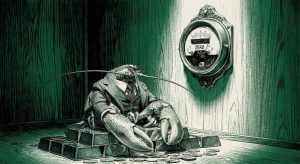
Too Cheap to Meter
Intelligence is deflating toward the cost of the electricity it burns. The gate is the meter the labs are fighting to keep running — and the 99.9% can just route around it